AFL
11 months ago
31 years of the final eight: Hits, misses and controversies
By Dylan Leach

Download the SEN App
Your Home of Sport, In your Hand
The final eight has reached its end after 31 years.
It has been part of football for generations and has seen 17 out of a possible 19 clubs (including Fitzroy) feature in the finals and reach preliminary finals.
Like anything that’s been part of the game during this period, the final eight has had its fair share of hits, misses, and controversies.
Former AFL CEO Ross Oakley reflected on the era of his leadership as a time of “ridiculous amounts of change,” be it overseeing the introduction of new clubs, venue rationalisation, mergers, TV rights, VFL to AFL, and changing the finals system from five, to six, to eight – just to name a few.
“As the competition was growing, we wanted to include more teams in the finals,” Oakley said.
“The aim was to keep more fans engaged for a longer period and to give more teams a shot at the finals.”
The journey to the creation of top eight was not straightforward.
The League initially expanded from a final five to a final six in 1991, but this system had its flaws. “It was a time of experimentation,” Oakley said.
This period of trial and error eventually led to the establishment of the final eight, which Oakley believes was the best fit given the League’s size and future growth, even though in 1994 the competition saw eight out of the 15 clubs play finals.
Naturally, there were objections and critics of the changes at the time, with many pundits arguing expanding the finals to a final eight would reward mediocrity, but the AFL pushed on, as was its style at the time.
HITS
First weekend 1994
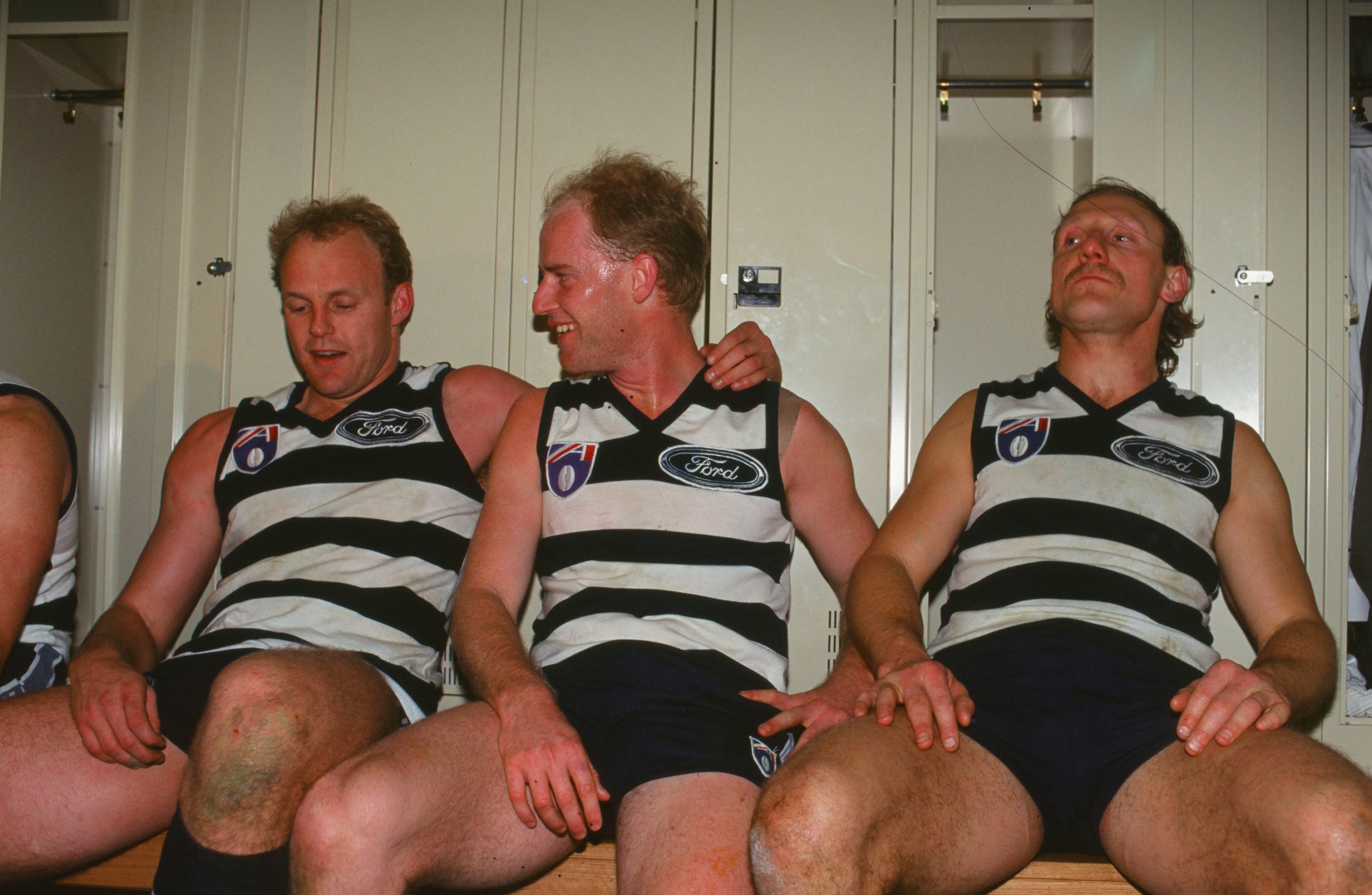
The first week of finals under the final eight system was an unequivocal success with all four games proving to be some of the best finals ever played.
Oakley and his team at AFL House couldn’t have been more delighted.
“It was a real thrill to have it end up the way it did with those games, not many complaints after that,” he said.
On Saturday afternoon at Waverley, North Melbourne and Hawthorn played the first final to go into extra time with the Wayne Carey-inspired Kangaroos going on to record a 23-point win.
Later that evening at the MCG, Billy Brownless became the “King of Geelong” with his kick after the siren that secured a five-point win for the Cats over Footscray.
The next day the premiership favorites – second-placed Carlton – was upset by seventh-placed Melbourne at the MCG by 27 points.
At the WACA, eighth-placed Collingwood fought back with six unanswered goals in the final quarter and could have caused an upset had the ball not bounced off the chest of Mick McGuane 40 metres out from goal and five seconds from the siren.
West Coast held on to win by two points in Tony Shaw’s final game for the Pies.
Miracle runs to the finals
In round 14, 1995, the Brisbane Bears were 14th on the ladder with 4-11 win-loss record, and then coach Robert Walls announced he would be leaving the club at season’s end.
Six weeks later, Brisbane was in the mix to make the eight, and in round 22 the Bears were 10th on the ladder and beat eighth-placed Melbourne by 21 points (with Demon Shaun Smith taking the ‘Mark of the Century’), relying on the 13th-placed Sydney Swans to beat ninth-placed Collingwood on the Sunday at the SCG.
The Swans came back from four goals down at half-time to beat the Pies by 23 points and the Bears were playing finals football for the first time.
An emotional Richard Champion was seen crying on TV as Channel 7 crossed to the Brisbane pub where the players had gathered to watch the game.
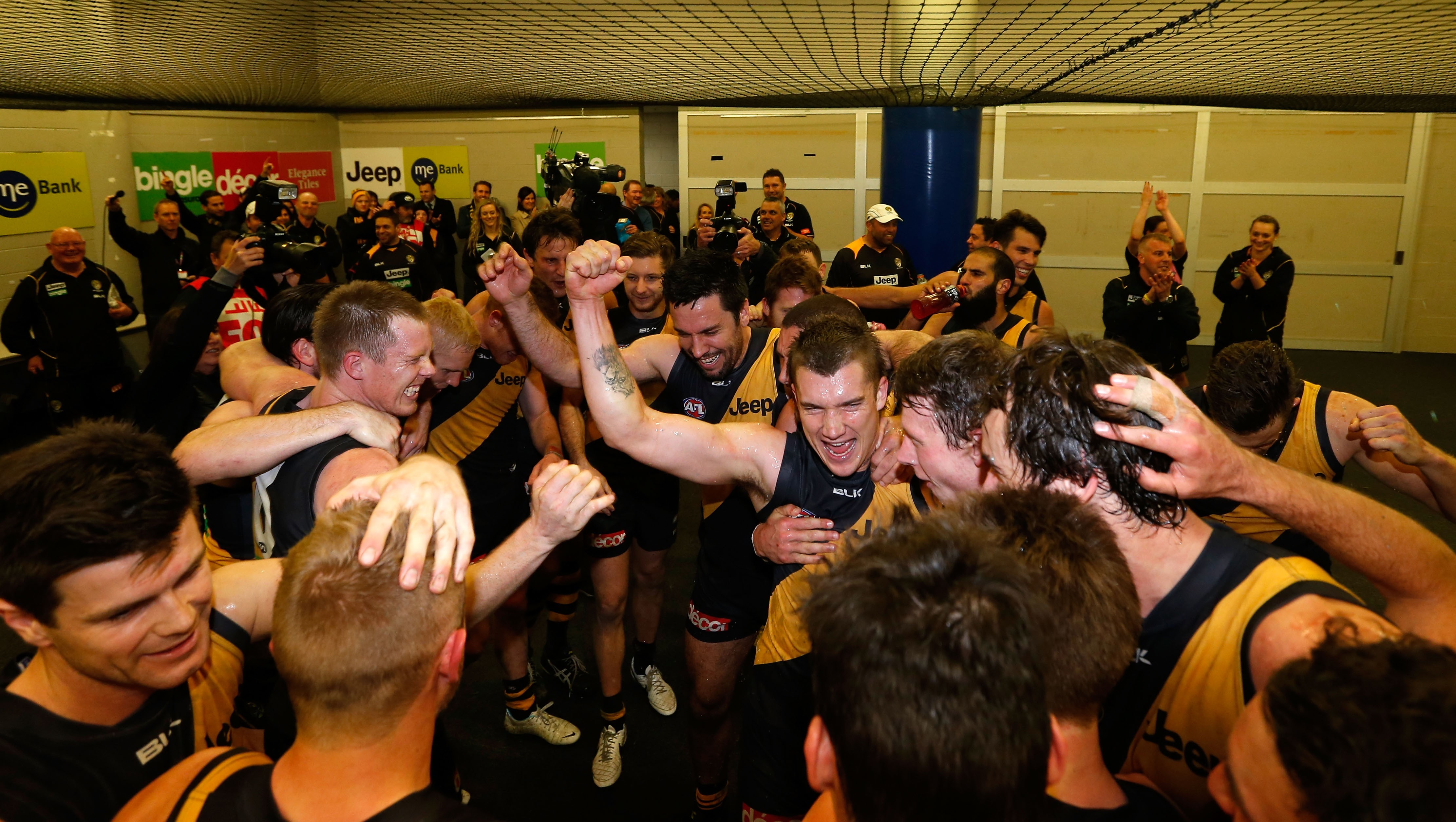
In 2014, after losing to Sydney by 11 points in round 14, Richmond sat 16th on the ladder with a 3-10 record.
The Tigers went on to win their last nine games including one over the top-of-the-ladder Swans in round 23 at Olympic Stadium in Homebush.
The game was an emotional rollercoaster that only the Tigers of the 1982-2017 era could produce. A three-point thriller highlighted by a young Dustin Martin kicking the sealer in a tense final 90 seconds.
Richmond finished in eighth place and elected to kick against the wind when playing fifth-placed Port Adelaide in the elimination final the following week.
Dynasties and frequent flyers
In the early days of the final eight, North Melbourne featured in seven consecutive preliminary finals from 1994-2000, in what was the greatest era for the Kangaroos.
The first quarter of this century has been highlighted by the ‘dynasty’.
We’ve seen the three-peats of Brisbane 2001-03 and Hawthorn 2013-15.
The Cats ended years of heartbreak with a dominant 119-point win in the 2007 Grand Final over Port Adelaide, only to add 2009 and 2011 to their collection.
Richmond awoke from its 37-year slumber in 2017, creating a dynasty of three out of a possible four premierships.
However, when it comes to the platinum status and racking up frequent finals points in the final eight era, the Swans and Cats get the priority boarding.
This year will be the 24th finals series that Sydney has featured in in the top eight era, for two premierships and five Grand Final appearances.
This weekend, Geelong will embark on its 23rd finals campaign in the top eight era, returning from what many down at the Cattery describe as a “gap year” in 2023
The system changes in 2000
The McIntyre system was scrapped by the AFL in late 1999.
The eight was split into top four and bottom four, where the top four teams played each other in the opening week and were guaranteed a double chance, with the bottom four playing in the elimination finals and needing to win four games to win the flag.
Then AFL chief executive Wayne Jackson told The Age at the time: “We think this system is more equitable to more teams, in so far as we can’t have the third or fourth teams, which have clearly won that right over the full season, being knocked out in the first week of the finals.”
Some 25 seasons later, the final eight 2.0 system is still going strong.
MISSES
McIntyre madness 1994-99
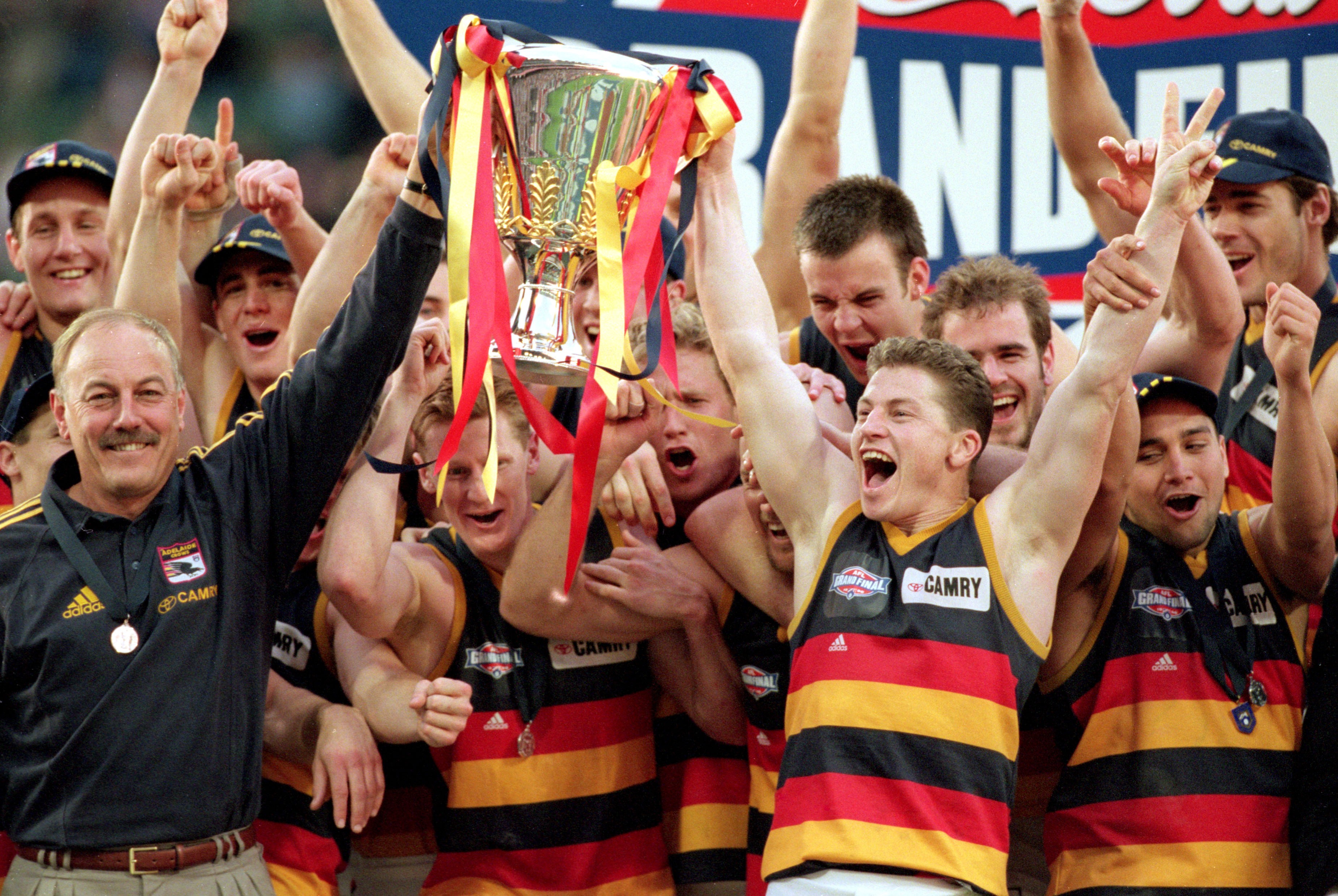
Had the current finals system been in place when the final eight was first implemented, Adelaide would not have been able to win the 1998 Grand Final and Essendon might have been spared the heartbreak of losing to Carlton by a point in that preliminary final in 1999.
The Crows finished fifth at the end of the home and away season in ’98 and lost to fourth-placed Melbourne by 48 points in the qualifying final, but still had a double chance and progressed to win back-to-back flags.
In 1999, Carlton finished sixth, and lost to third-placed Brisbane at the Gabba by 73 points, beat West Coast ‘away’ in the semi-final following week at the MCG, upset Essendon in one of the club’s greatest wins and lost to North Melbourne in the Grand Final.
However, arguably the team hardest done by in the McIntrye system was second-placed Geelong in 1997.
After finishing the home and away season with 15 wins, seven losses, the Cats lost their opening final to seventh-placed North Melbourne by 18 points.
Under the McIntyre system, Geelong as the highest-placed loser, took on the highest-ranked winner in the semi-finals, which happened to be Adelaide, and played away at Football Park, as first-placed St Kilda and the third-placed Western Bulldogs progressed to the preliminary finals.
The Crows won, the Cats were out in straight sets and any Geelong supporter will tell you that Leigh Colbert took that mark which wasn’t paid during the third quarter.
‘Ninth-mond’, Dees’ unfortunate mail-out and Blues’ heartbreak
Before the Tigers’ dynasty of 2017, 2019 and 2020, Richmond finishing ninth on the ladder was the then version of “how many days since Essendon won a final” among football’s comedians.
The Tigers finished in ninth place at the end of seasons 1994, 1996, 1998, 2000, 2006, and 2008.
In 1994, the first year of the final eight, Richmond’s ninth-place finish was the club’s best season since 1982, so Australian Football Video – then the major producer, retailer and distributor of footy VHS videos including the weekly ‘Name-A-Game’ videos – saw fit to capitalise on the Tiger Army’s desperation for success releasing a season highlights video titled Tigers on the Prowl with insights from former player Mal Brown and then skipper Tony Free.
Heading into round 23, 2017, Melbourne had about a 97 per cent chance of making the final eight, so much so, the club was confident enough to mail out a brochure explaining to members on how to purchase finals tickets.
The Demons just needed to beat Collingwood and/or West Coast to lose to Adelaide or win by under 28 points.
Neither of those happened.
Within 48 hours of that worst-case scenario, long-suffering Dees’ members started to receive a pamphlet in the mail with Nathan Jones and Jack Viney boasting: “We are excited to share this journey with you.” It didn’t go down too well.
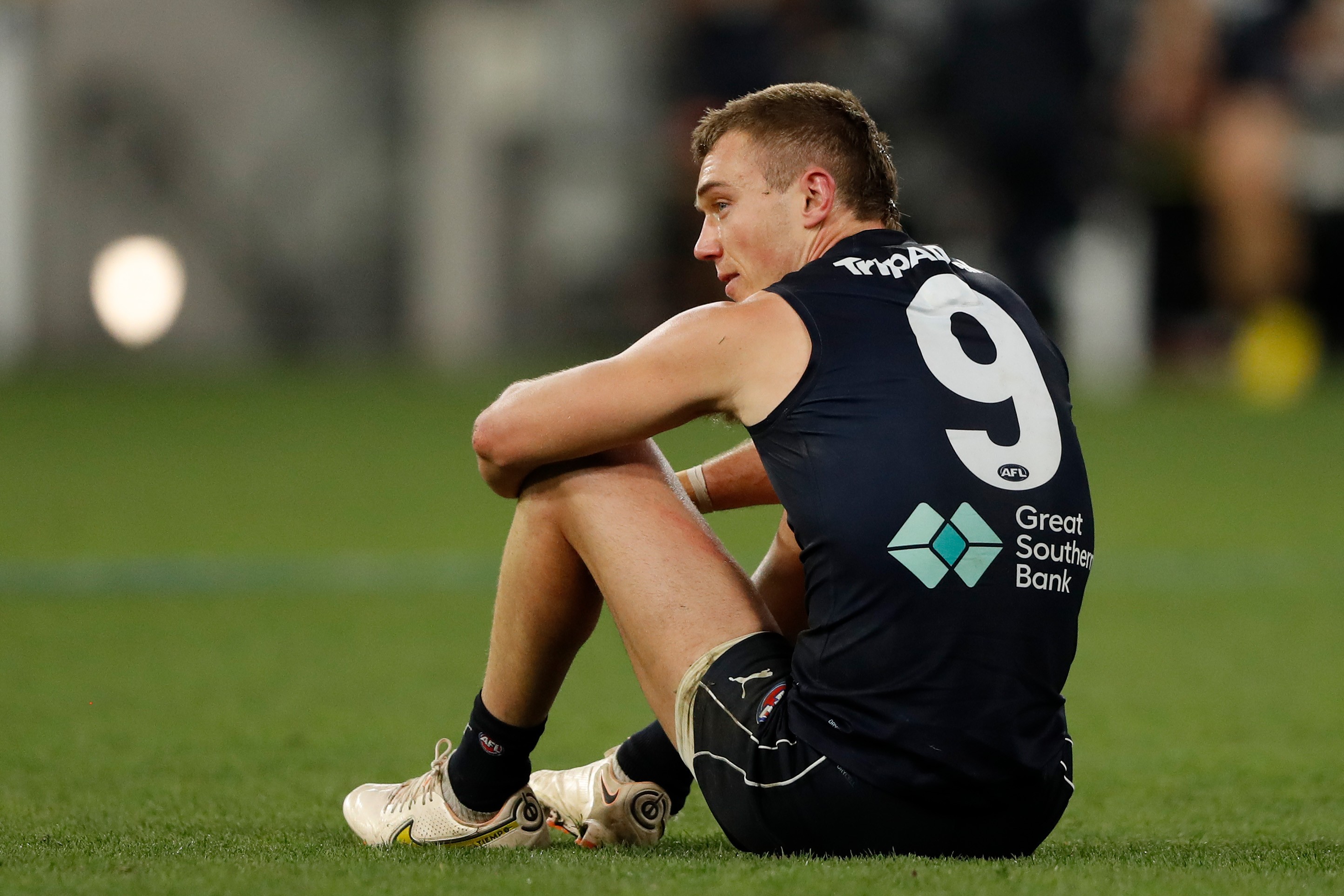
However, the most tragic of the ninth-placed finishes is reserved for Carlton in 2022.
The Blues had spent every week of the home and away season in the eight and found themselves 24 points up at three-quarter time in the last game of the year against their old rivals Collingwood.
The Pies kicked the final five goals to win by one point and deny Carlton a spot in the finals by the barest of percentage margins.
CONTROVERSIES
Interstate home finals at the MCG
For several years, the AFL held a contract with the Melbourne Cricket Club that required the MCG to host a final every week, no matter who was playing.
This deal resulted in West Coast, Adelaide and the Brisbane Lions playing ‘home’ finals in Melbourne – all against Victorian clubs.
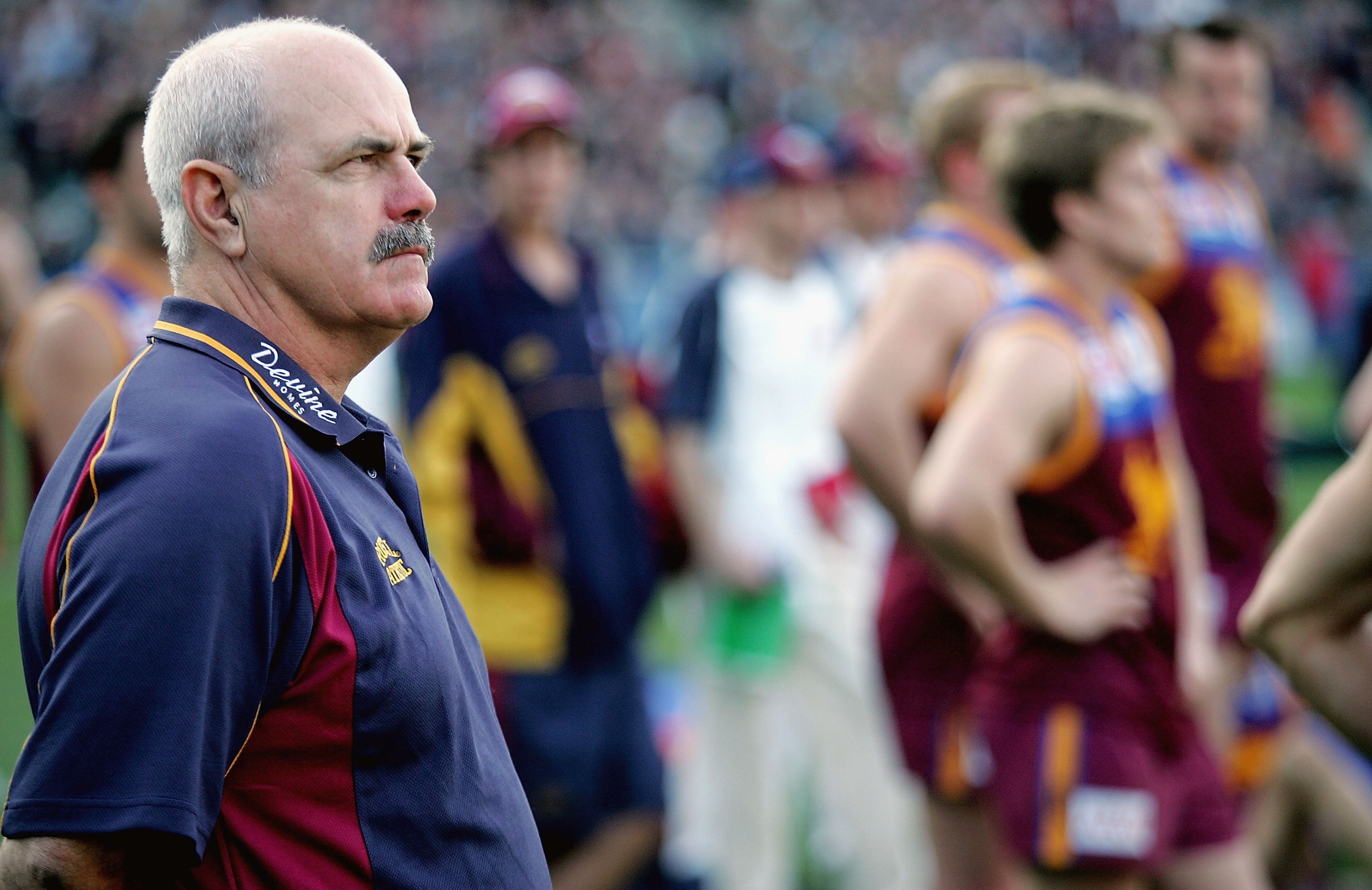
West Coast was forced to play ‘home’ finals against Essendon in 1996 and Carlton in 1999 at the MCG, Adelaide managed to win its ‘home’ semi-final at the ’G against the Demons in 2002 and it’s best not to mention that the Brisbane Lions were made to host a preliminary final against Geelong at the MCG in 2004 to Leigh Matthews.
“Do I feel we were dudded by the schedule? Well, yes, I do … in my mind the AFL denied us our best shot at winning a historic fourth consecutive premiership,” Matthews wrote in his book, Accept the Challenge.
The AFL and MCC eventually re-negotiated the finals contract, with the MCG now locked in to host the Grand Final until 2059.
Bombers booted out, Blues win from ninth 2013
Essendon was disqualified by the AFL from the 2013 finals in the wake of the supplements scandal, resulting in Carlton, which had scored a stunning come-from-behind win against Port Adelaide in round 23, to ‘Stephen Bradbury’ its way into the September action.
The next week, in the elimination final, the ninth-placed Blues recorded a famous 20-point win over the Tigers in one of the club’s greatest wins this century. In an ironic twist of fate, the ninth-placed team on the ladder defeated Richmond which, as referenced earlier, had made finishing ninth an art form for many years.
The pre-finals bye: 2016-present
When both Fremantle in 2010 and 2013 and North Melbourne in 2015 fielded the equivalent of reserves teams in their respective final home and away round clashes to assure themselves of certain positions in the final eight, the AFL saw fit to introduce a pre-finals bye.
“The AFL has introduced a bye week before the finals so that those clubs playing in September can have the best possible lead-in and preparation for the most important matches of our season,” then CEO Gillon McLachlan said at the launch of the 2016 fixture.
The subject of the pre-finals bye has been a divisive one since its inception, but it’s safe to assume that Western Bulldogs fans are the biggest advocates, given star players were able to rest up leading into their miracle run to the 2016 premiership from seventh place.
However, critics of the bye have argued that it is unfair to the clubs that have finished in the top four. They point to the fact that in only three out of the seven pre-bye seasons (2017, 2022 and 2023) that both qualifying finals winners went on to win preliminary finals and then progressed to the Grand Final.
In a one-off move in 2021, the pre-finals bye was changed to a pre-Grand Final bye before the Melbourne-Western Bulldogs Grand Final in Perth during COVID.
NAME A GAME – THE BEST FINALS OF THE FINAL EIGHT ERA
We’ve dug up the video tape collection here at AFL Record, and picked out all the ‘Name-A-Games’ from the best finals (outside of the Grand Final) to feature over the past 31 years.
We reckon it’s a pretty good collection, however, if we’ve missed any, rest assured, the tape is on its way.
BEST FINALS (outside of GFs)
Week 1
- 1994 QF – NM d Haw
- 1994 QF – Geel d Foots
- 1996 QF – Bris d Ess
- 2002 QF – Coll d PA
- 2005 QF – WCE d Syd
- 2006 QF – WCE d Syd
- 2010 QF – St K v Geel
- 2013 EF – Carl d Rich
- 2016 QF – Geel d Haw
- 2017 EF – WCE d PA
- 2020 EF – Coll d WCE
- 2022 QF – Geel d Coll
- 2023 EF – Carl d Syd
Week 2
- 1994 SF – Geel d Carl
- 1995 SF – Rich d Ess
- 2005 SF – Syd d Geel
- 2007 SF – Coll d WCE
- 2009 SF – Coll d Adel
- 2011 SF – WCE d Carl
- 2023 SF – Carl d Melb
Week 3
- 1994 PF – Geel d NM
- 1996 PF – Syd d Ess
- 1997 PF – Adel d WB
- 1999 PF – Carl d Ess
- 2004 PF – PA d St K
- 2011 PF – Coll d Haw
- 2012 PF - Haw d Adel
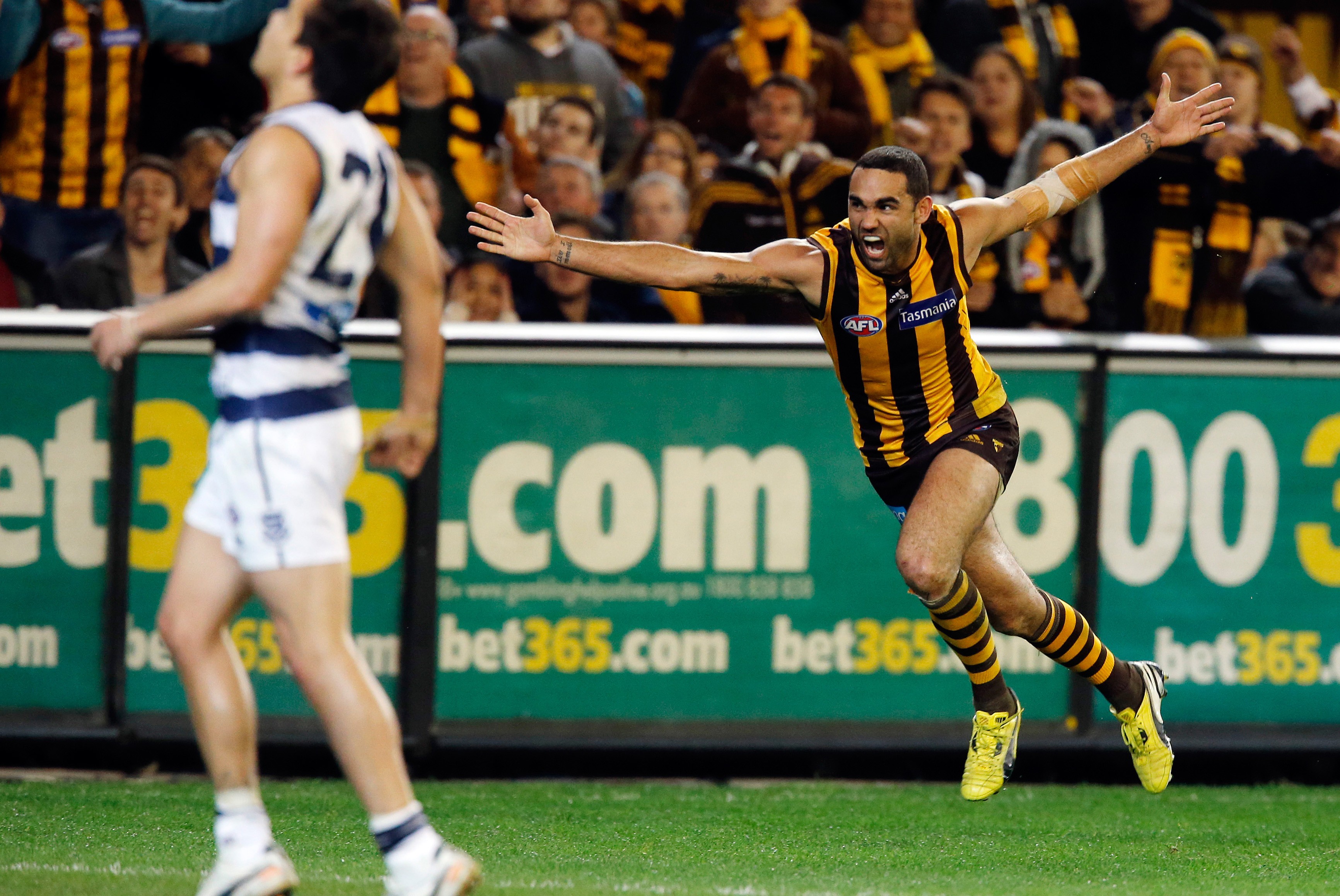
- 2013 PF – Haw d Geel
- 2016 PF – WB d GWS
- 2020 PF – Rich d PA
- 2022 PF – Syd d Coll
- 2023 PF – Coll d GWS