NRLW
2 months ago
The NRLW deal that will decide if the women's game really matters
By Glen Hawke


Download the SEN App
Your Home of Sport, In your Hand
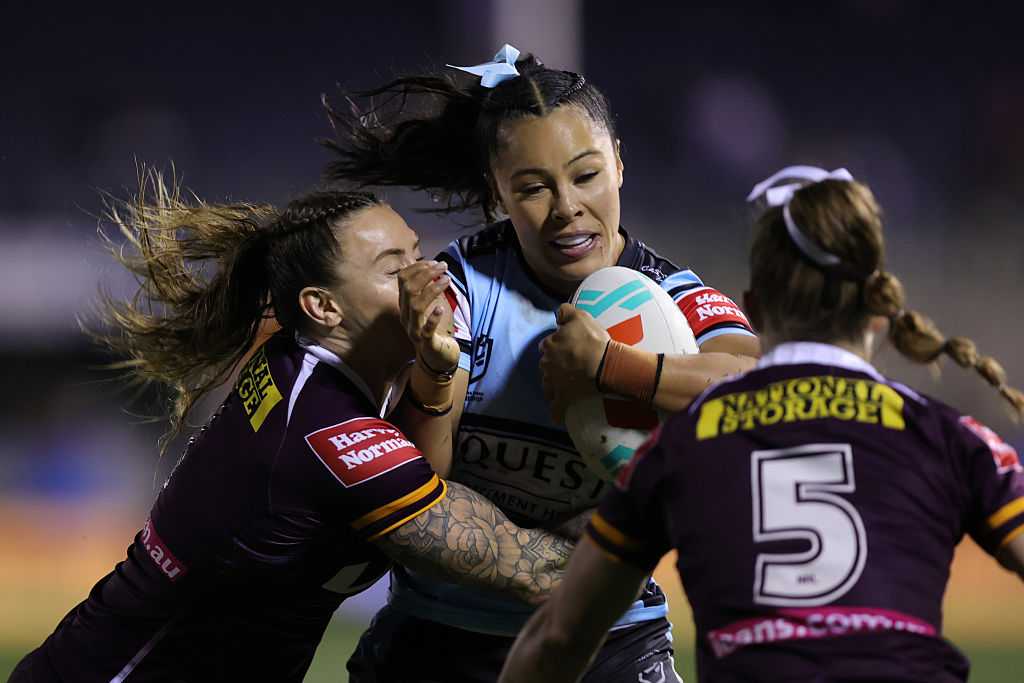
The ninth season of the NRLW kicks off on Thursday night.
I've been there as a fan and someone who's worked in the game since day one. I love this competition, I love what it's become, and I love what it means to so many people.
I don't say that lightly, because the women's game in this country didn't have to happen.
Somebody had to decide to build it and the people running rugby league did. They backed it, they grew it, and the numbers now are staggering. More than 50,000 women and girls are now registered to play rugby league in this country.
50,000!
That's not a niche. That's a movement, and the game deserves real credit for building it.

So, this isn't a complaint. But I'm someone who loves this competition and wants it to be everything it can be – at exactly the moment that's up for grabs.
Because here's the thing that nags at me and the thing I can't shake every season.
We keep scheduling the women's game to fail.
Let me give you the numbers, because they tell the whole story.
The Newcastle Knights at McDonald Jones Stadium in 2023. A home NRLW game drew a crowd of 12,500.
12,500 people to watch the women play.
Now, the following year, same club, same ground, another NRLW game – a crowd of less than 4,000. 12,500. Then under 4,000.
Now, what does that tell you?
It tells you the appetite is there.
Novocastrians love their rugby league. They will turn out in their thousands for the women's game and 12,500 of them did. So, when the crowd comes in at under 4,000, it's not because the people of Newcastle don't care.
It's the conditions. It's when you put the game on. It's how you schedule it.
The demand is real. We're just not always giving it a fair run.
And here's the one that gets me. Look at the draw.
The Knights have a home NRLW game this season on Sunday, 19 July. A standalone game at 6:15pm.
And here's the kicker – July 19 is the last night of the school holidays. Kids go back to school that Tuesday. So, you've scheduled an NRLW game – a game whose whole future is built on young girls falling in love with it – on a Sunday night at 6:15pm the night before the alarm goes back on for the school run.
Who is that timeslot built for?

It's not built for the family with a 10-year-old daughter who idolises players such as Yasmin Meakes and Olivia Higgins. It's not built for the crowd. It's built for something else.
This issue is not limited to club games. Look at Women's Origin.
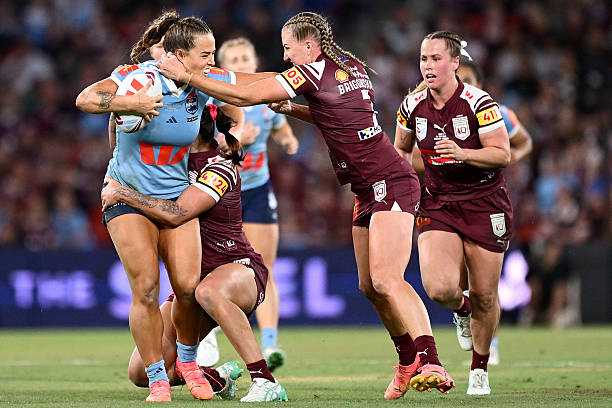
The best women's rugby league product we've got – the pinnacle of the sport – was played this year across April and May.
The whole series, done and dusted by the end of May. The NRLW season starts in July.
So, we play the showcase event – the one that creates the stars, builds the rivalries, gets people talking – before a hit-up or a tackle is made in the premiership season. All that Origin momentum, all those new fans – and then nothing, for a month, until the clubs start. We light the fire, then we walk away and let it go out, and start again from scratch.
Timing isn't the only issue here either. It's the football itself.
Origin's played in pre-season before these players have had a single club game, before they're anywhere near match-fit. And we've seen what that produces. Game Ones that didn't do the women justice. Not because the players aren't good enough – they're the best in the world at what they do. Because the schedule asked them to peak before they'd even played a game.
Let's think about what that means. We take our showcase event – our shop window, the one moment we've got the whole country watching – and we make the players perform it cold. We set them up to be judged at their least prepared, and then we wonder why some people don't come back.
You wouldn't do that to the men's game. You'd never run the men's Origin series before the NRL season started. It'd be madness. There'd be a riot.
Now, here's where I'll lose some of you. Because I reckon the answer to a lot of this is double-headers. Play the women before the men. Same ground, same day, same crowd already through the gate.
And I know what some of you are going to say, because some of the smartest people in the women's game say it too. They say: don't bolt the women onto the men. Don't make them the warm-up act.
They'll never get their own identity, their own night, their own stars, if they're forever the support act before the main event. Let them stand on their own feet.
And I hear that. I do. And yes, standalone games are working for Origin. But, at a club level, I think it's exactly backwards.

Because standing on your own feet sounds proud – right up until you're standing on your own feet in front of less than 4,000 people on a Sunday night. There's no identity built in an empty stadium. You don't grow stars playing at a venue less than a quarter full the night before school goes back.
You put them in front of 12,500 fans. You let a kid who came for the men's game get there early or stay in their seat longer to discover the women's game. That's how you win converts. That's how the men's game can continue to grow the women's game – by sharing the crowd, not quarantining it.
Standalone is a reward you earn once the crowd already knows your name. You don't start there. You build to there. Again, Women's Origin has proven that.
Now, I know exactly why it's not happening more. Television scheduling. The commercial reality of what goes where and when.
But here's where it gets interesting. Because of the timing.
The current broadcast deal runs out at the end of 2027. Which means the next one – the deal that shapes the next decade of this game – is being worked on right now. The conversations are happening as we speak.
This is the moment. This is the actual window.
The game tells us women and girls are central to its future. Those are the words.
"A springboard for the growth of the women's game".
"Committed to growth from grassroots to the elite level."
“50,000 girls playing”.
That's the promise being made loudly, proudly, and rightly.
The new broadcast deal is the moment that promise either becomes real or gets quietly revealed as a line in a media release.
Because you can say women and girls are central to the future all you like. But if you schedule their game for the last night of the school holidays, and run their Origin before the season starts, then the words and the actions don't match.
The deal is where you fix that. Not with a statement, but with a timeslot.
The deal that decides this is on the table right now. Let's not get it wrong.