Cricket
4 hours ago
“Traumatic experience”: Smith bares all ahead of South Africa return
By SEN

Download the SEN App
Your Home of Sport, In your Hand
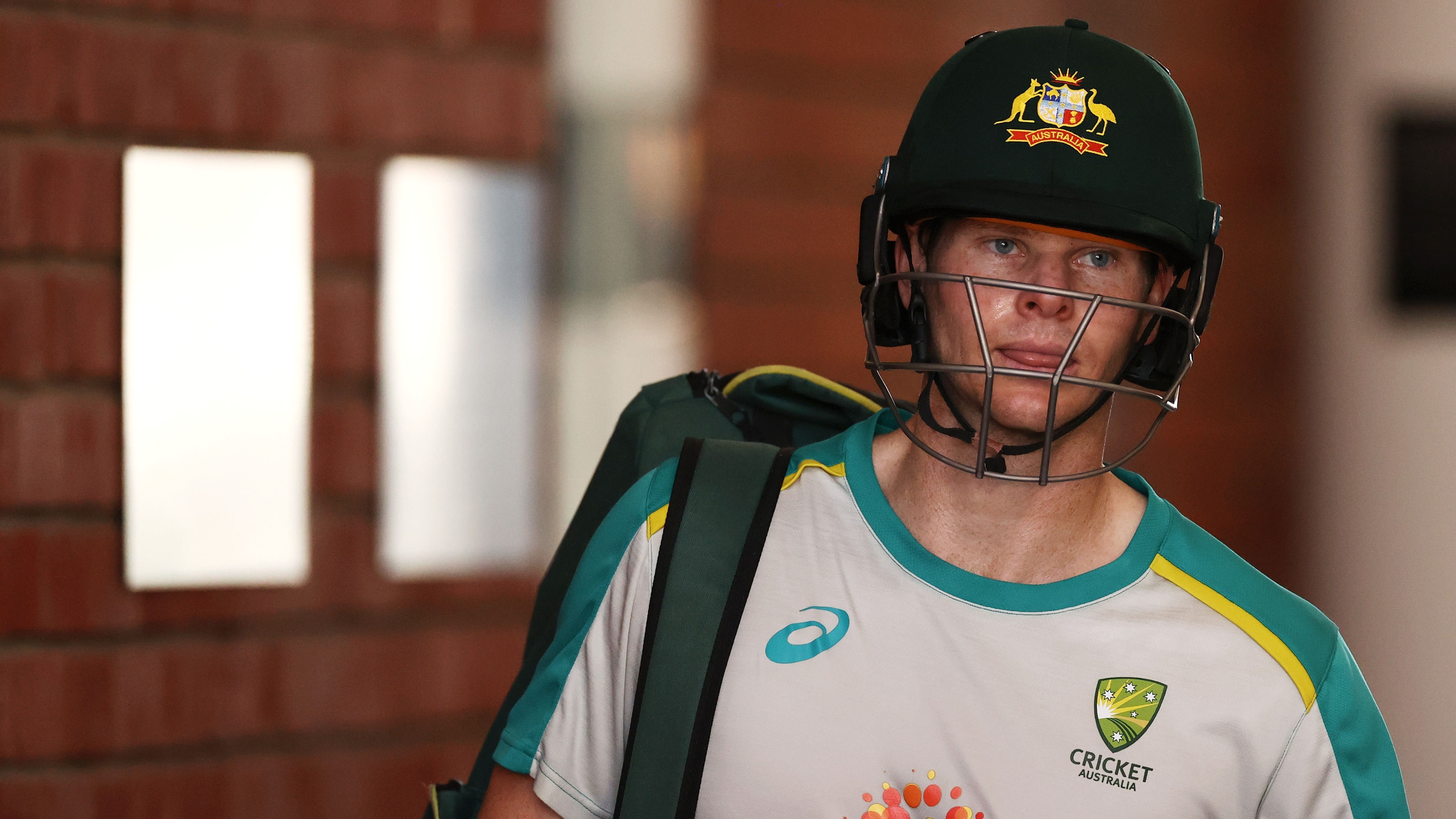
Australia’s Steve Smith has laid bare the wounds that still exist from the 2018 ‘Sandpapergate’ saga in South Africa.
Smith, who was then captain of the Aussies, was banned for a full year by Cricket Australia following the incident after young batter Cameron Bancroft was caught ball tampering with sandpaper.
While both Bancroft and David Warner also served bans, Smith’s status as the world’s best player and Australian captain at the time saw him come under the most scrutiny, and it was how the press dealt with him which is what has left the biggest scars.
Smith was swamped by cameras at both Johannesburg Airport and Sydney Airport as he left South Africa following the incident, and it was when he departed on the flight back home that he delivered a tearful press conference which still haunts the now 37-year-old.
Speaking to Code Sports ahead of Australia’s Test return to South Africa next month, Smith admitted he still gets anxious around cameras after the ‘traumatic experience’.
“I’m not a big fan of cameras … I get anxious around cameras to be honest … That was a traumatic experience in my life, and when I hear the flash of a camera it makes me revisit that in a way,” Smith told Code Sports.
“The 24-48 hours of being told by James Sutherland (Cricket Australia chief executive) that I was getting banned for a year. That and going through the airport in Johannesburg getting absolutely mobbed, and then flying back and doing that press conference (was my toughest moment).
“… I still have little flashbacks here and there of it. I felt like I was kind of thrown to the wolves through the airport. I didn’t have any support there at all.
“I get flashbacks (from a) camera and a flash, which is what I experienced in that traumatic moment in my press conference. They’re intertwined in a way.
“I’ve never played this game for fame or infamous situations or anything like that. I played the game because I love it and I love doing it.
“(The scrutiny) was certainly like nothing I’d ever experienced before or have experienced since. It was an eye-opening moment for me and a learning curve for me about how passionate cricket fans are in Australia and around the world.
“After I finished that press conference, I could kind of somewhat escape.
“It was certainly a difficult period, particularly the initial period a few days after. The mental state I was in was not great. That’s somewhere I’d like not to get to again, but I certainly learned from that and have been able to move forward with my life.”
While Smith returned to Test cricket a year later with a brilliant 2019 Ashes series from an individual perspective, 2018 is a year he’s learned to forget about.
“I’ve tried to kind of erase a lot of 2018 and what happened,” Smith said.
“I can’t remember a lot about the series. I’ve tried to block most of it out of my memory bank.
“My first hundred back at Edgbaston … I really got emotional.
“I had to take a couple of breaths because I just wanted to burst into tears. I didn’t know whether that moment would ever happen again.
“… Coming back, I was like, ‘am I still as good as I was? Do I belong?’ Then to just take all the monkeys off the back at the same time, I felt I belonged, and I helped Australia out of a bad situation.”
While Smith will no doubt be targeted by South African fans when the three-Test campaign kicks off in October, the 2026 tour itself holds no fears for Australia’s No. 4.
“No I never really had those thoughts to be honest (about refusing to return). I’m actually excited to go back,” Smith said.
“It’s something I’m kind of used to. I’ve copped a lot at times away from home at different venues across my career and it’s something that I take in my own stride.”
The three-Test series begins on October 9 in Durban. You can listen to the entire series LIVE on SEN and the SEN app.