AFL
2 years ago
Pendlebury picks the five names who have most shaped his 400-game career
By Ben Collins

Download the SEN App
Your Home of Sport, In your Hand
Gliding over the ground as effortlessly and gracefully as he has, Scott Pendlebury has often made League football look ridiculously simple. But you don’t get to 400 games without graft and with a willingness to listen and to learn. On the eve of becoming just the sixth player in history to reach this incredible milestone, Pendlebury outlined to the AFL Record’s BEN COLLINS those who have most shaped his football career. They in turn, offer their tributes in return.
He is one of the most decorated players in AFL/VFL history, but as we have gleaned over his glittering 19-season career, Scott Pendlebury couldn’t care less about individual honours.
Something the Collingwood legend does care about, though, is paying tribute to the small army of people who have helped him on his extraordinary journey.
As Pendlebury prepared to become the first Magpie and just the sixth League player overall to reach 400 games, we asked him to nominate a handful of people who have most influenced his career. As is the ‘Pendles’ way, he over-delivered, providing 13 names – too many for this exercise.
However, we soon settled on a shortlist of five key figures at Collingwood: former coaches Mick Malthouse and Nathan Buckley, ex-assistant coach Robert Harvey, former captain Nick Maxwell and ex-teammate Paul Licuria.
“I owe them all a beer, that’s for sure,” the 36-year-old quipped.
“You don’t get to play 400 games just on your own mental strength and training. It’s a product of good people and good coaching. I’ve been really lucky with my coaches and other leaders, who have pushed, prodded, guided, challenged and influenced me all the way through.”
Here, Pendlebury speaks about their influence, and then we hear from the influencers themselves, some of whom reveal they were also influenced by Pendlebury, as we peel back some of the many rich layers that make up arguably the greatest Collingwood player of all.
MICK MALTHOUSE
Coached Pendlebury from 2006-11 (including the 2010 premiership)
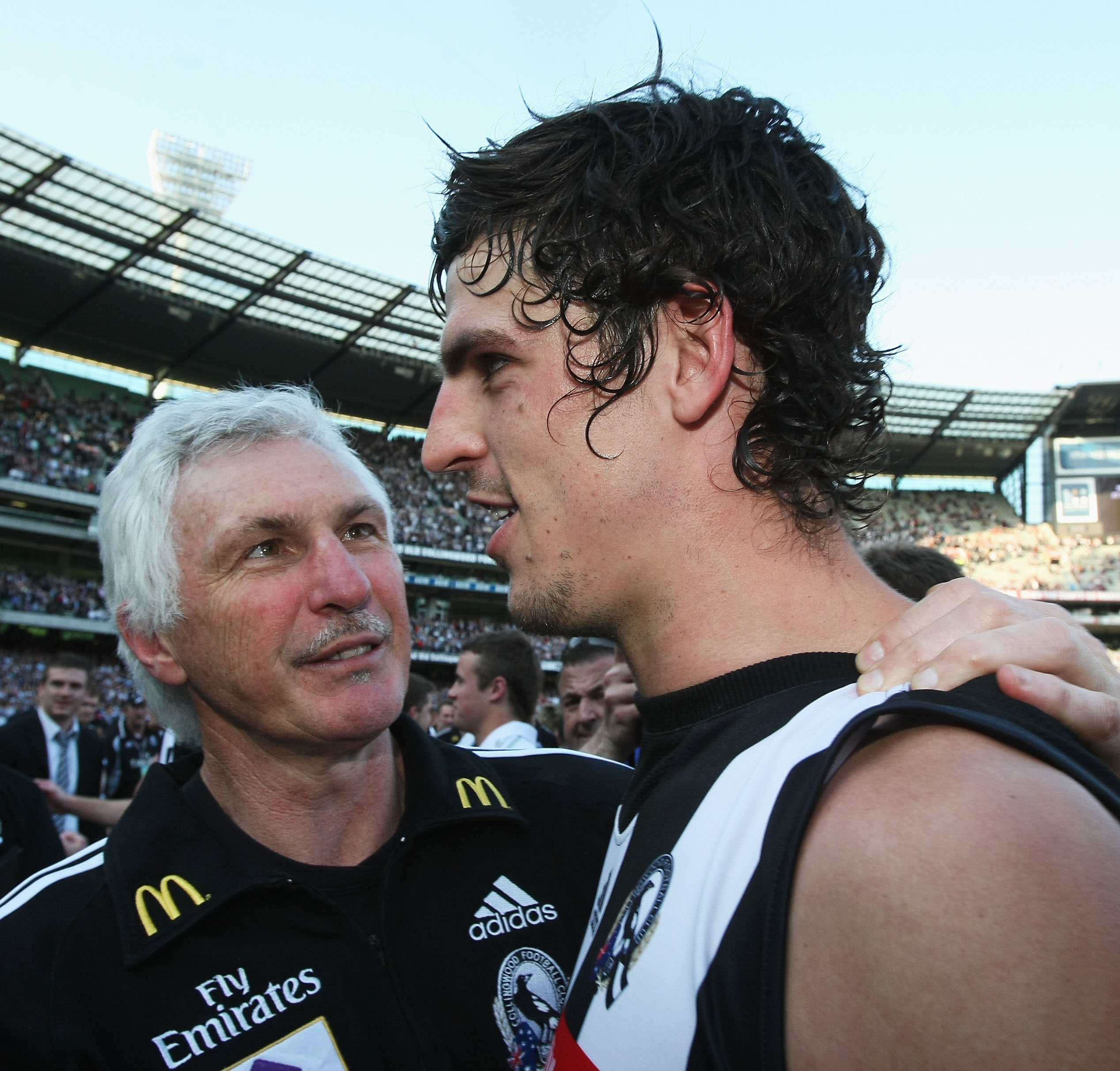
Scott Pendlebury: “Mick was such a big footy figure that as a young bloke I had genuine fear because I wouldn’t know what to say if I bumped into him in the corridor. But I quickly learnt how much he cared for us, and he made us young guys feel confident.
“His feedback was great; really honest – just the way I like it. Mick was also the first person to let you know how well you played and why.
“He always stressed the importance of playing well in big games and finals, and the importance of team and playing your role. A lot of great lessons I love about being a team and winning come from how hard Mick coached us on them.
“He was a master motivator. He also understood I was a different type of player to most in how I played, how I moved, and my laconic game style. Mick didn’t try to turn me into something I wasn’t – he just let me be me. When I was a kid in the VFL playing as a wing/half-forward, he quickly picked up that I’d be more suited to an inside midfield role.
“I owe so much to Mick and his guidance."
Malthouse: “It was quite easy to coach Scott because, like a lot of great players, he was so self-driven, he got it, and he had the capacity to absorb information and act upon it. From the outset, he looked like a young bloke on a mission.
“We had this impression early on that Pendles was a winger/half-forward and that ‘Daisy’ (fellow 2005 draftee Dale Thomas) was an inside midfielder, and I still think Daisy could’ve done that, but a little swap there gave us what we wanted and they both blossomed.
“Pendles is unique among the 400-gamers. The one thing the others all had, apart from durability obviously, was speed. Pendles would be the first to admit he’s not quick, so he breaks that mould. But he’s always been able to bring the pace of the game back to him, which very few players can do, because he’s quick-minded and has wonderful vision of the game."
PAUL LICURIA
Teammate 2006-07, board member since 2018
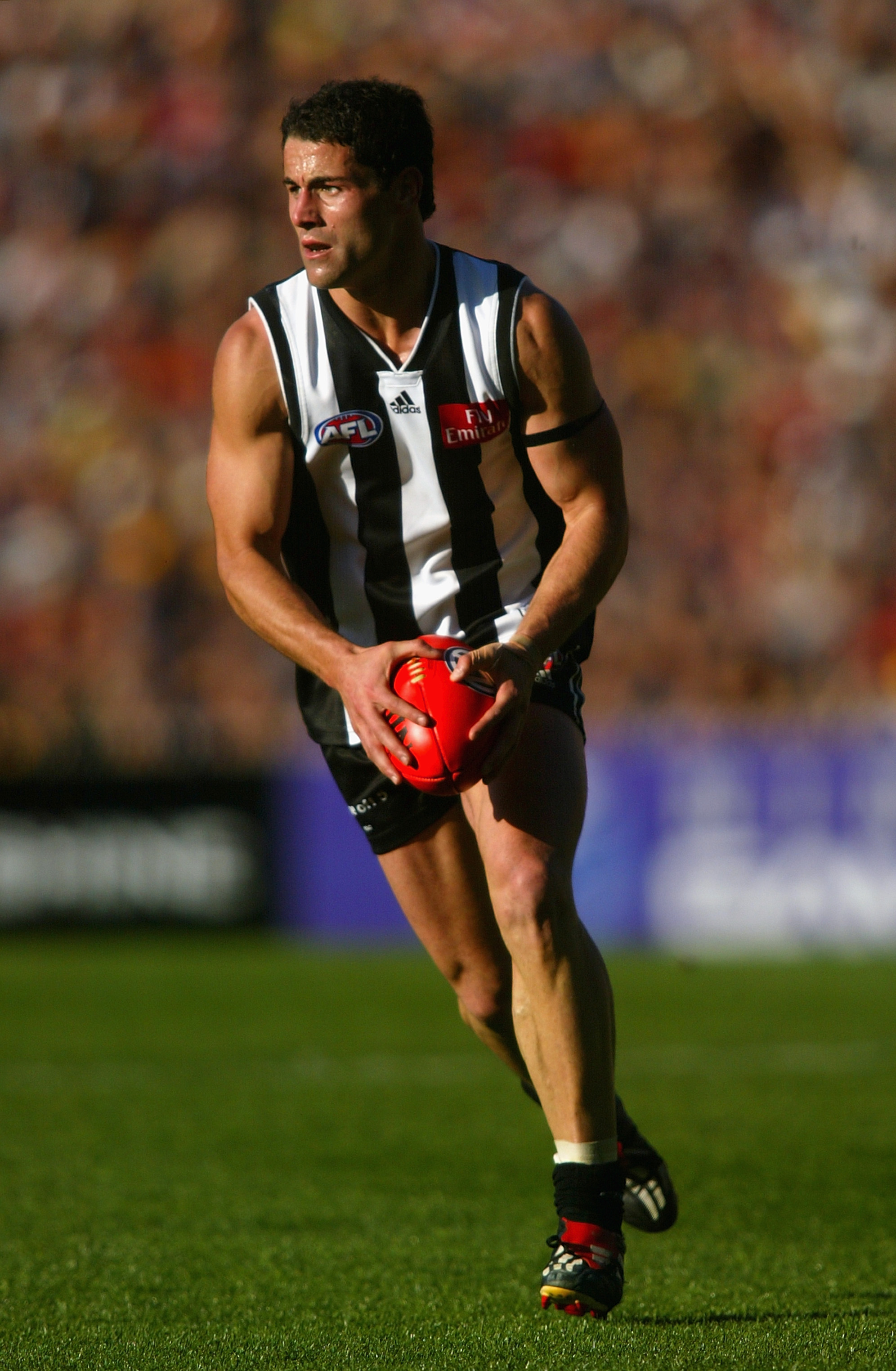
SP: “I had glandular fever in my first pre-season but played a few AFL games that year (2006) and was determined not to play VFL ever again. Mick (Malthouse) said: “Find the best trainer at the club and do what he does.” So I asked ‘Licca’ and he was fine with it, even though we might compete for a spot at some stage. So I’m forever indebted to Licca for sharing his secrets with me.
“I thought I had a reasonable understanding of how to prepare myself, but after every session Licca did extra running, gym and ball work at really high intensity, and at times I was just hanging on for dear life. I’d get home and have a sleep. Then he’d message me to get to the club an hour early the next morning to do some lifting before anyone else arrives. I’d reluctantly message back, “No worries, see you then.” It was a massive eye-opener, but that’s what I signed up for.
“You don’t know what you don’t know, but Licca showed me.
“He wasn’t the most talented player but he was the hardest worker, and he outlasted everyone – and he set me on that path. (In his second season, 2007, Pendlebury finished runner-up in the Magpies’ best and fairest in a top-four team.)"
Licuria: “I’ve always had this philosophy that the best way to help yourself is to help someone else, so I was never threatened by training young blokes because it pushed me further. I learnt that as a young bloke at the Swans when (captain) Paul Kelly grabbed me and flogged me.
“(At Collingwood) I’d get young blokes to train with me and they’d turn up for a session or two, or a week, but they’d drop off because they didn’t like the idea of doing extra work. Pendles was different because he always kept fronting up. There were times I hadn’t texted him so he’d text me, “What time tomorrow?”.
“Pendles was always going to find it hard early because he’d had glandular fever and he didn’t have that fitness base, but he built it up really quickly compared to others. He’d push as hard as he could. He also did all the recovery sessions with me – ice baths, beach walks – on top of what we did at the club.
“He really surprised me with his maturity at such a young age to make the most of his opportunity. He was always asking questions about diet, recovery, workload and so on, and he soaked up everything, and he’d challenge it too. He was obsessed with being the best he could be, so it’s no surprise what he’s achieved.
“I’m just rapt I can tell my kids, “I played with Pendles”.“
NICK MAXWELL
Captain 2009-13 (including the 2010 premiership), teammate 2006-14, club official from Nov 2017-July 2022
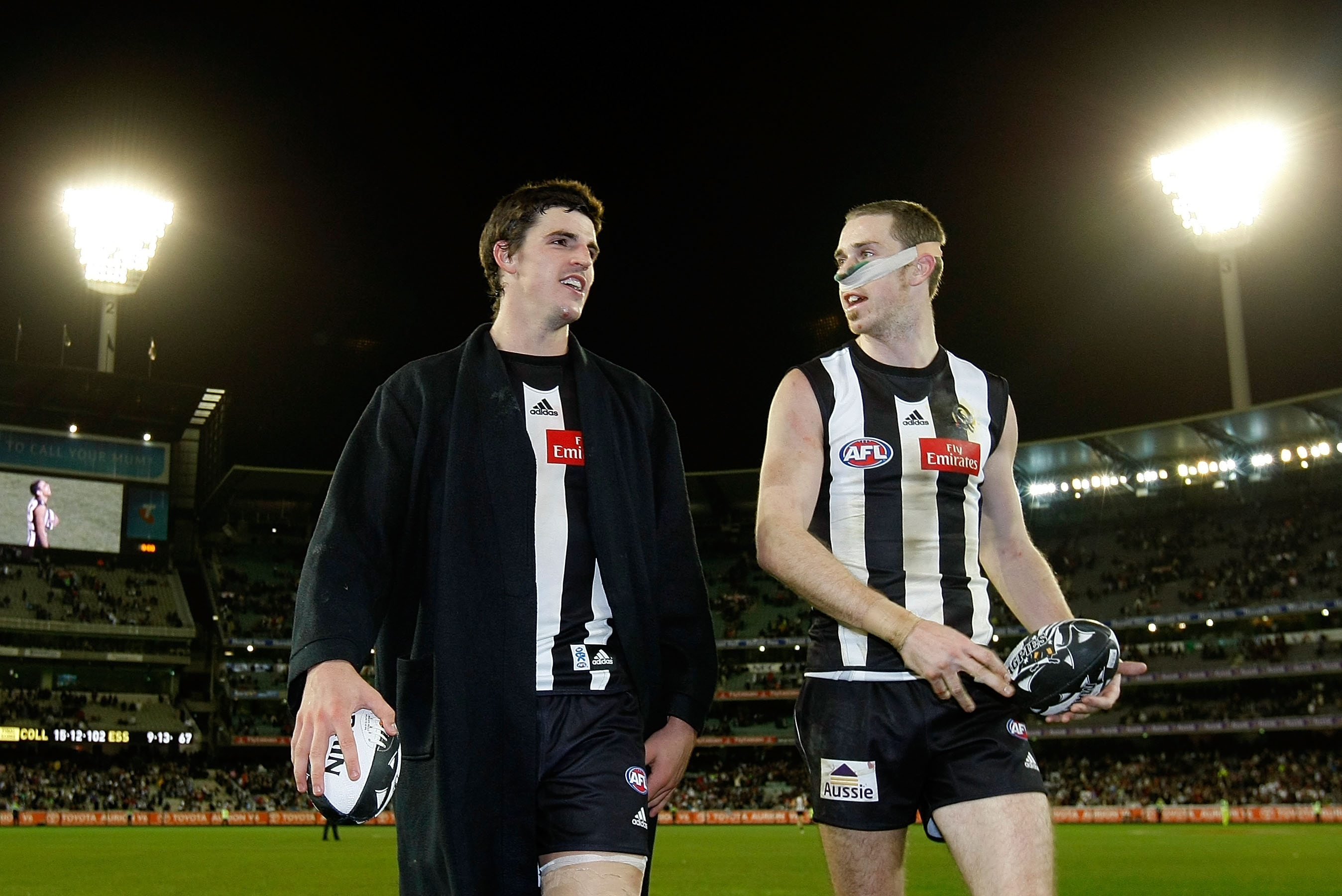
SP: “‘Maxy’ was such a great connector of the group. Early days, he’d get us young guys over for dinner, and invite us to things we didn’t know were on. He made everyone feel welcome.
“At the end of my second year (2007) Maxy told me, “You should go for the leadership group this year. A lot of the young guys follow what you do, you train hard.” He put it on my radar, made me feel like I could contribute in that way, and was willing to help me, and I got into the leadership group in my third year. There was ‘Bucks’ (captain Nathan Buckley), Scotty Burns, Jimmy Clement, Maxy and 20-year-old me. Maxy made me think that I could do more for the team than just play well.
“I was Maxy’s vice-captain for a while (five years) and he exposed me to different responsibilities, which set me up really well for when I transitioned to the captaincy. He’s such a good, genuine, caring bloke too, and he taught me so many valuable lessons."
Maxwell: “I was lucky to have Bucks and James Clement pull me aside when I was young and teach me what leadership was, so I just passed on the experiences I’d had – and then others were lucky to be mentored by Pendles and he took them along for the ride.
“He went from understanding how to be a brilliant player to understanding how he could help others be better.
“Pendles wasn’t aggressive or confrontational in his tone because he was given leadership responsibilities from a young age and we protected him early on from having to pull up more experienced players on things, and he gradually evolved into a great leader.
“He’s also the best Collingwood player I’ve seen, because of the longevity of his high standard. Bucks and ‘Swanny’ (Dane Swan) would’ve had greater peak periods and games, but Pendles’ high-level consistency over such a long period is unheard of."
NATHAN BUCKLEY
Captain 2006-07, assistant coach 20010-11, coach 2012-21
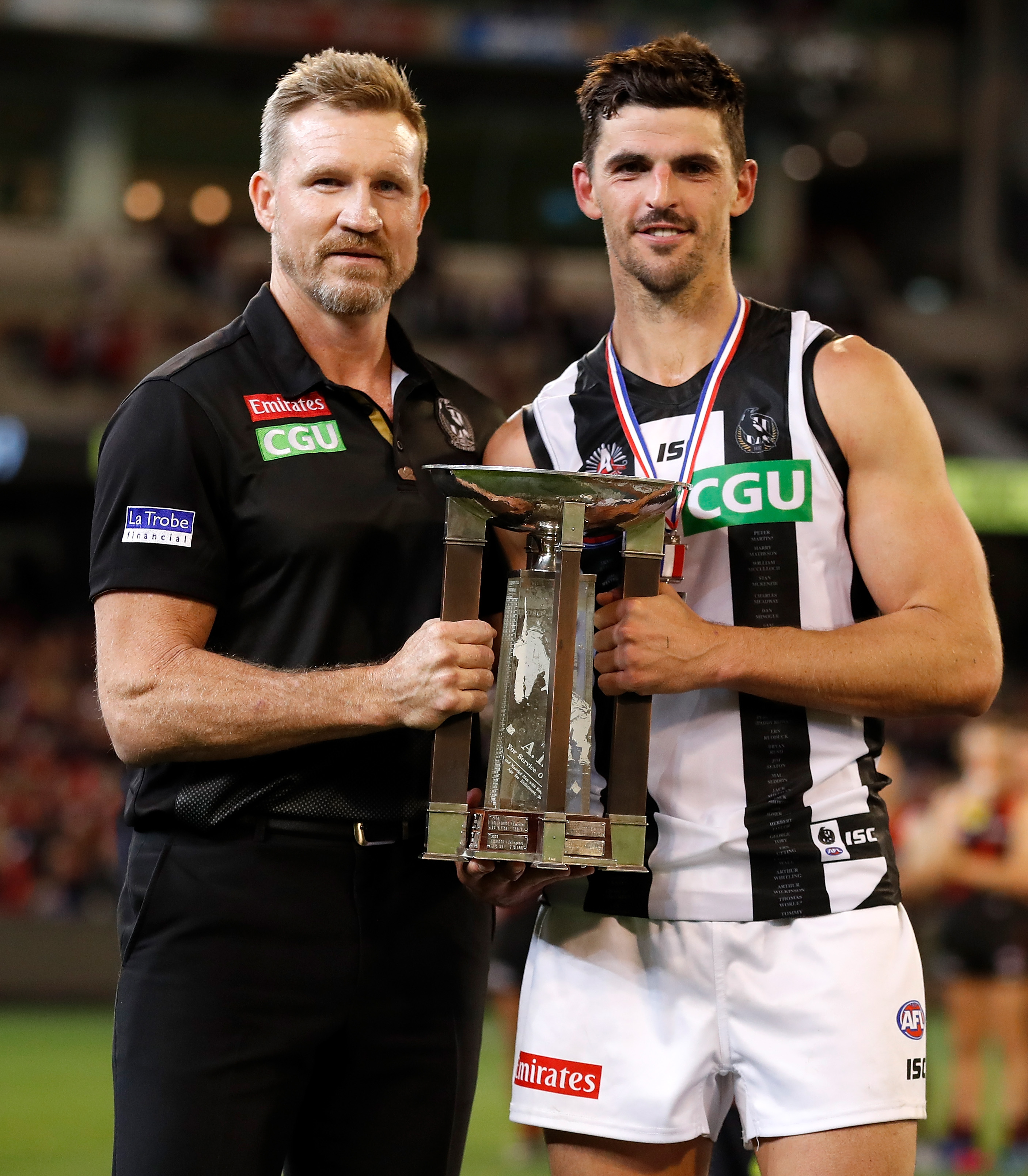
SP: “Bucks was my first captain and I’m not sure I’ve seen anyone as driven, as determined to win and wanting to do what he could for the team. He was 34-35 when I played with him and I thought, ‘Wow! How good is he!’ He was still training his backside off and so competitive, and I was so impressed with everything he did.
“Later on we became really close as captain and coach for a long time, and I’ve taken so much from Bucks, especially relationships and footy. We challenged each other a lot, always respectfully, and we navigated that well. We were a strong, united team with the club’s interests always first.
“I’ll always remember the conversations, be it on the bus or the plane, where you’re talking footy with someone who loves it as much as you do."
Buckley: “There hasn’t been anyone in my time who’s laid down the right behaviours so consistently as Pendles. And he’s done it in a really understated manner. He knows what will benefit him and the team and what won’t, and still leaves room for innovation, being inquisitive and adding something new that might find an extra half-a-percent.
“He was great for me, the coaching staff, the team and the club.
“You don’t want to rely on one bloke but when Pendles was out on the field, guys found themselves in better positions in a zone sense, and stoppages were set up much better. He’d play his own high-level game while organising his teammates and helping them perform – that was his superpower.
“As a young bloke he was always well measured and composed, and that’s been a consistent theme throughout his career.
“He’s an independent thinker. He’d come to a pre-season, a session, a game review or preview and present his own thoughts, which was invaluable given his footy knowledge is through the roof.
“He’s super-strongminded and at times quite stubborn about the things he believes in. He was quite headstrong with coaches and teammates and if he thought something should be done a certain way he’d often just make it so.
“He’d have to be Collingwood’s greatest player. He’s been top 10 in the League basically since he’s been in it, and top five for most of it, and I don’t know how many other players can claim that. I can’t see how he won’t become a Legend (in the Australian Football Hall Of Fame)."
ROBERT HARVEY
Assistant coach 2012-21, caretaker coach 2021
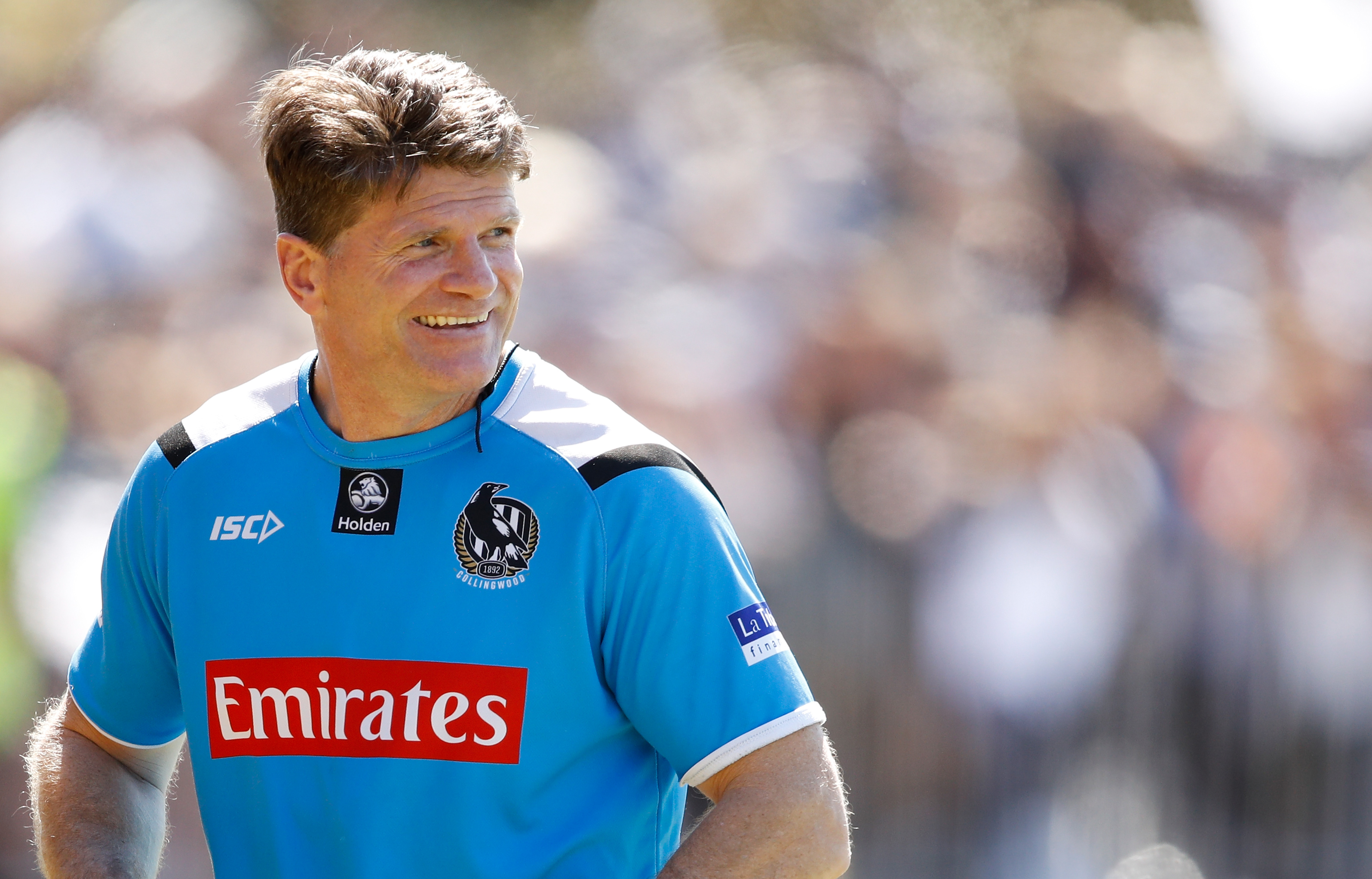
SP: “‘Harvs’ has been my biggest footballing mentor. He was my longtime midfield coach and I loved how he saw the game and his drive to succeed, but his relationships with people are first-class. No one has a bad word to say about Harvs.
“I really rated him as a coach too. In ’18 he showed our midfield group some vision about where we wanted to get to, and we became that group.
“Harvs kept challenging me as a player. He’d always say, “You’re never a finished product. You can always get better.” He also got across, “Never put a limit on how long you can play for. If you’re performing, you’ll play,” and, “As you get older you need to train more, not less.” It worked for him over 383 games as a player, and I leaned on that.
“Harvs also knew what triggered me so he could get me back into form and confidence by telling me things like, “Right now we need you to stop coaching out there and just hunt the ball. Everything else will just fall into place after that.” And it would. He was unbelievable for me.
“We’d have conversations about things like coaching, because I’ve got an interest in coaching.
“He’s also one of the funniest blokes I’ve ever been around over a couple of drinks. I could sit and listen to him all day because he’s got the best stories."
Harvey: “I’ve never come across a guy who is so self-aware and influences others like Pendles could. He was the best player, the best leader, the best organiser – the best everything – and he’d coach on the field. What more could you want?
“As a player he actioned growth areas so well that he’d become almost the best at them as well, while not dropping off anywhere else.
“(His wife) Alex has been great for him because he’d been so rigid about everything and then he loosened up, and his relationships went to another level and he became a massive influence for everyone, including the coaches.
“If a player wasn’t sure about something, Pendles would spend as long as it took to explain it or go through vision, and then he might have lunch with them. And what he’s done for Jordan De Goey is a great example of how Pendles can influence people. He’ll coach one day, for sure.
“He’s his own person, too. He knows who he is, and he’s unapologetically himself all the time.
“I learned a lot from him. I could go on about him forever."
The others nominated by Pendlebury were his parents Bruce and Lisa, his older brother Kris, basketball coach David Mowbray, Collingwood recruiter Derek Hine and former Pies employees Alan Richardson (then development coach), Simon Lloyd (psychologist) and Marcus Wagner (football operations).