Cricket
10 months ago
"Downright embarrassing": Cash shame Ashes can't hide from
By Tom Morris

Download the SEN App
Your Home of Sport, In your Hand
Every summer is littered with storylines and this Ashes had no shortage of narratives – good and bad – to punctuate a largely one-sided series.
These are the 15 biggest storylines, ranked in order, from Australia’s fourth consecutive Ashes victory at home.
1. STARC’S GOLDEN SUMMER
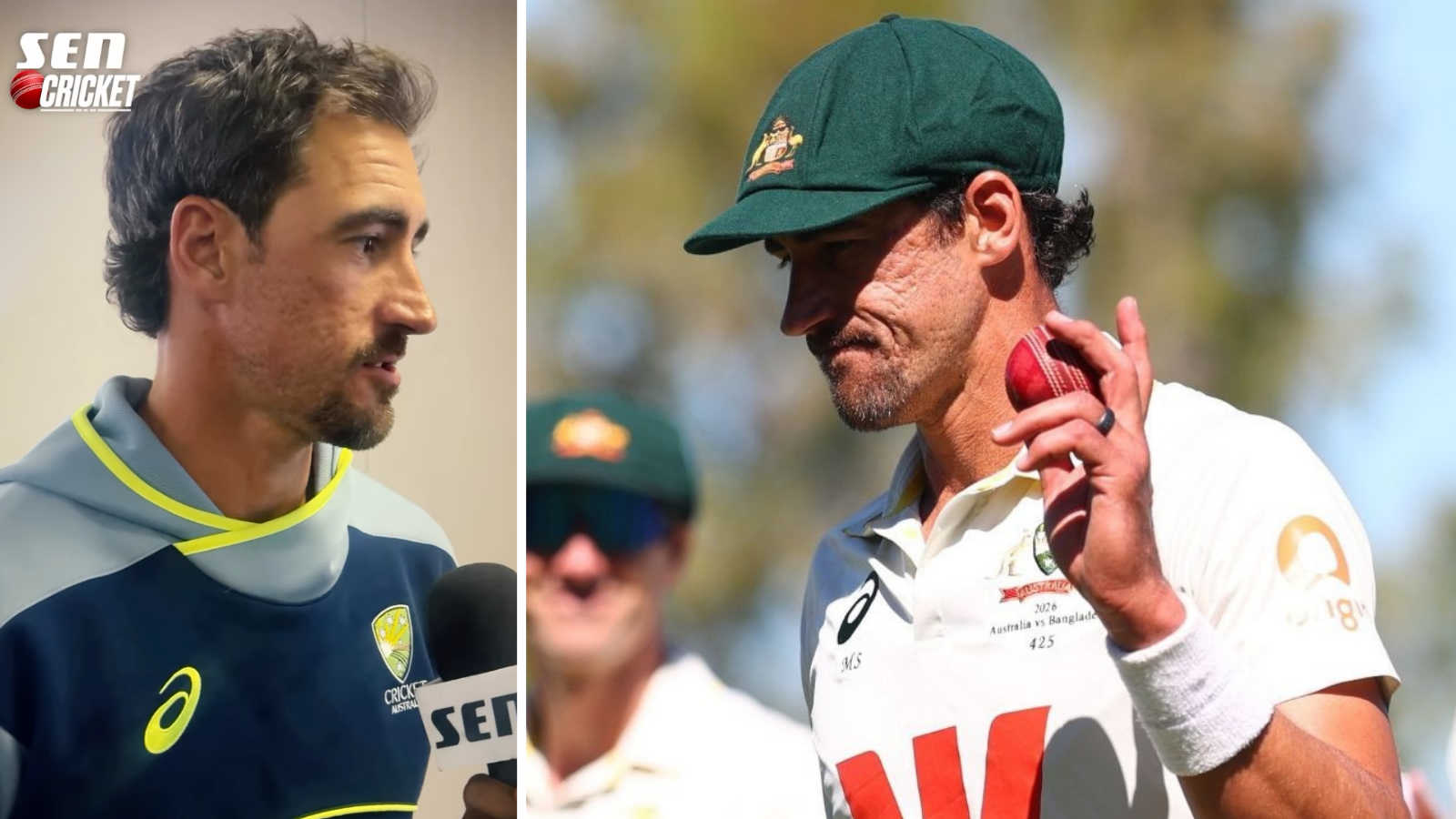
In a summer when Mitchell Starc became the greatest left-arm seamer of all time, he turned it on when it mattered most.
First in Perth, then in Brisbane and Adelaide, the Sydney-sider was at his best when things were most tense in the 'live' matches.
He took four first over wickets - Zak Crawley three times and Ben Duckett once - and had a stranglehold over all English batters too.
The Summer of Starc was a great exclamation point on a career often overshadowed by teammates and his white-ball exploits.
His 31 wickets is the most for an Australian since Mitchell Johnson in 2013/14, and his runs in Brisbane and Adelaide were critical.
This was a legacy summer for Starc, and he passed with flying colours.
2. TRAV-BALL > BAZBALL
Only Steve Smith and Sir Donald Bradman have scored more runs in a home Ashes series than the 629 that Travis Head plundered this summer.
Head began the series at number five, became a makeshift opener, and never looked back. Each of his three tons was special in a different way.
Perth won Australia a Test in the space of two hours, Adelaide continued his love affair with the ground, and Sydney saw the lefty tick past the 600-run barrier for the summer.
Head’s strike-rate of 87 dwarfs even David Warner’s, which gives you an idea of how dominant he was against the hapless English, who had no answers for his swashbuckling style.
It speaks to how dominant Starc was that Head didn’t win player of the series. Only Steve Smith, Steve Waugh and Allan Border have won more man of the match awards than Head’s 11.
3. RIP BAZBALL
Whatever Bazball was, and however it was interpreted by different people, it died this summer.
And it died for two reasons: 1) The style quite clearly didn’t work in Perth or in Brisbane. And 2) the most successful batters for England played more traditional Test cricket.
In Joe Root at Brisbane and Sydney, Zak Crawley in the second innings in Adelaide and Jacob Bethell at the SCG, three England batters found formulas which worked and entirely rejected a philosophy which was never going to fly in these conditions anyway. Even Ben Stokes, one of the architects of this era, himself proved that it’s possible to grind and succeed with the bat.
England’s three-year plan fell in a heap and it remains to be seen how deep the collateral damage will cut a group which arrived with such optimism, but leaves broken, battered and bruised.
Ciao Bazball, it was nice knowing you.
4. TWO-DAY TESTS
Perth was a shame, but Melbourne was downright embarrassing. Yes, the batters warrant criticism for being unable to fight through difficult conditions. But the MCG pitch was unsatisfactory, as conceded by the MCC themselves and formalised at ICC level.
Cricket Australia simply cannot afford any more two-day Test matches, reputationally and or financially. The broadcasters hate it and the fans – while entertained in small doses – deserve more.
5. ROOT’S LEGACY SECURE
Joe Root arrived in Australia for a fourth time without a Test ton to his name. As England’s greatest ever batter, it would have been a blight on his record to miss out on reaching three figures on these shores.
After failing in Perth, Root landed in Brisbane and looked immediately comfortable against the pink ball.
He followed a ton there with another in Sydney, finishing the summer as the second highest run-scorer behind Head.
Yes, these runs came against a bowling attack that didn’t feature Pat Cummins (who dismissed Root twice in Adelaide), but if the task was to make a century in Australia and he did so twice, then that’s a tick.
6. THE WEIRD AND WONDERFUL WORLD OF USMAN KHAWAJA
Usman Khawaja’s entire career has been littered with unexpected moments. Some have been incredible, while others have left him frustrated and on the outer.
His back spasms in Perth followed a round of golf the day before the Test, which drew mountains of criticism from former players and saw the left-hander fire back in his retirement media conference.
But on the field, Khawaja’s career looked over after he failed to return to the 12 in Adelaide. That was until Steve Smith went down with vertigo, opening up a spot in the middle order for Khawaja to fill.
His 82 in Adelaide was enough to usurp Josh Inglis for Melbourne, and from there he kept his place for an 88th and final Test in Sydney.
At 39, Khawaja picked the perfect time to call stumps. And he leaves the game as a trailblazer who never shirked a difficult topic.
7. NOOSA DRAMA
When England went to Noosa in between the Brisbane and Adelaide Tests, it was always going to create a stir.
Fair or otherwise, the optics were poor. Here was a team struggling for form, drinking beer and frolicking on the beach. What could possibly go wrong?
English journalists had a field day, reporting on all manner of things which reflected poorly on Ben Stokes and co. England promptly conducted a review after a drunken video of Ben Duckett was spread, though there were no adverse findings.
In reality, the damage was done. Noosa 1, England 0.
8. FALLING LIKE FLIES
Have you ever seen a series with so many injured bowlers? Stalwarts Nathan Lyon, Pat Cummins and Josh Hazlewood played three Tests between them, while Mark Wood flew home after Perth.
Jofra Archer lasted three, then Gus Atkinson went down in Melbourne and Ben Stokes finally fell in Sydney.
These injuries illustrated Australia’s exceptional depth compared to England’s next battery of bowlers.
Michael Neser and Scott Boland fitted in seamlessly, whereas Matthew Potts was a genuine weak link in the fifth Test.
The Australian summer is always attritional, and though it wasn’t the reason England lost 4-1, they were long odds to avoid injury given a distinct lack of first-class cricket in the months leading up to the series.
9. BRILLIANT BETHELL
Jacob Bethell’s 154 was a masterclass in Sydney. He came to the crease with Mitchell Starc purring and survived Scott Boland’s inquisition superbly.
This was the moment a star was born. He’s England’s ray of hope and should fill the all-important slot at first drop for the next decade, providing he’s managed pragmatically.
He showed up top order teammates – particularly Ben Duckett and Ollie Pope - and demonstrated maturity well beyond his 22 years.
It’s a knock which will go down as one of the best ever played by a touring batter at the SCG. Brian Lara was right, Bethell is a serious talent.
10. WHAT IS SPIN?
The death of spin bowling in Test cricket may appear to be an overreaction, but it was real this summer.
For each of the last three Tests, neither side played a specialist tweaker. And England refused to select one all series.
From an Australian perspective, much of this was conditions-based. But the truth is a future beyond Nathan Lyon might not be far away.
Do the ends justify the means? Australia won in Brisbane and Sydney without a spinner, does that mean it was right?
11. BIG BEAU v GREEN
Despite a stronger recent record, Australia went for Cameron Green over Beau Webster in Perth and then backed the West Aussie all summer.
But Webster finally got a chance in Sydney – much to the delight of the average punter – and he didn’t disappoint. ‘Slug’ made 71 not out and took three important wickets on day four to further illustrate his versatility.
Big decisions lay ahead for the selectors, who must decide whether Webster’s bowling warrants a genuine all-rounder tag and if he has done enough to usurp Green for the Bangladesh series.
As if to further highlight the difference in their two paths to the national team, Green will soon embark on a lucrative IPL stint, whereas Webster will return to the Hobart Hurricanes before finishing the Sheffield Shield season in Tasmania.
Green might well be the future, but Webster is the present and he’s making it impossible for George Bailey and co to ignore him.
12. SAFE HANDS
Alex Carey had one of the all-time great series for a gloveman. He finished with 28 dismissals – one shy of Brad Haddin’s record from 2013/14 – and averaged 46 with the stick.
His ton in Adelaide was one of the great moments of the series, made in front of family and friends just three months after the passing of his late Dad.
His high ball catch at the Gabba was one of the best this summer.
13. THE LEADERSHIP CREW
Smith and Cummins, Cummins and Smith. It doesn’t really matter, does it?
Rarely has Australia had such interchangeable captains.
Smith averages 100 when he skippers Australia in Tests, while Cummins is already an all-time great. The fast bowler will re-assume the mantle when he’s fit, but Smith is a more than adequate deputy.
14. AUSTRALIA LOVES TEST CRICKET
Regardless of what the rest of the world is doing with the game’s oldest format, Australians still enjoy Test cricket.
The Sydney Test was the most attended in history, with 211,032 fans coming through the gates across the five days.
And the total attendance across the series was the third highest in Australia. Had Perth and Melbourne lasted four days each instead of two, the all-time record would have been broken.
For all of Test cricket’s vagaries and frustrations, it’s still a gloriously nuanced and at times brilliant viewing sport.
15. AUSTRALIA LOVES STUART BROAD
A villain becomes a hero! Who would have thought this would be one of the great redemption stories for the summer.
What a pleasure it was to work alongside such a fundamentally decent man and a terrific analyst. Long live 'Broady' on SEN.