BBL
1 month ago
Cricket Australia CEO's take on BBL privatisation rejection
By Nicholas Quinlan

Download the SEN App
Your Home of Sport, In your Hand
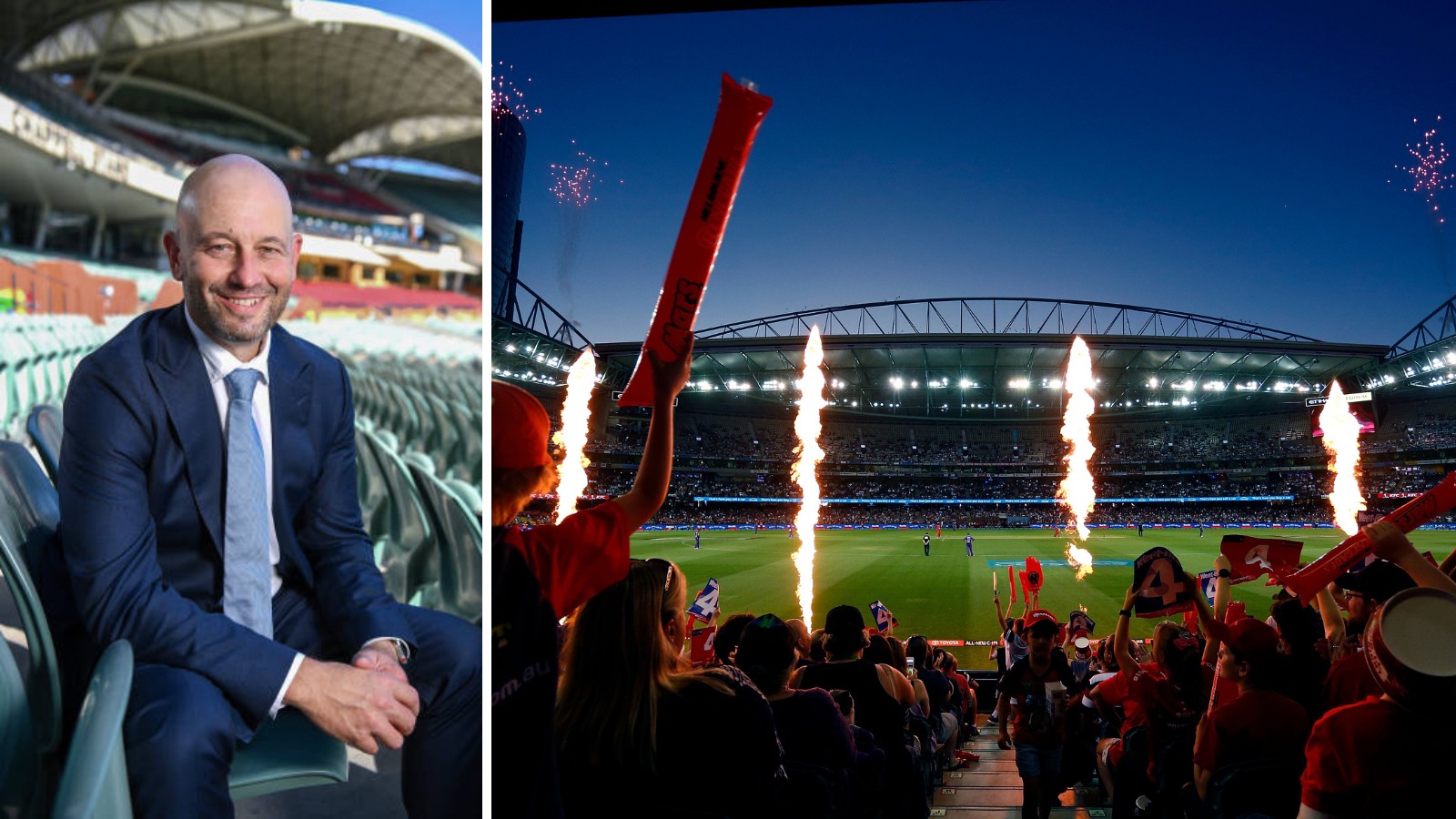
Cricket Australia CEO Todd Greenberg has spoken following the initial rejection of privatisation within the Big Bash League, believing the concept could still happen despite not having concensus from the states.
Having initially floated the possibility of selling minority stakes in the league’s eight franchises to private investors in July, the issue has been hotly debated between CA and the six state cricket associations (who have leases from the governing body to run and operate the sides).
And while Victoria, Tasmania, and Western Australia supported the move, NSW and Queensland rejected the idea, with South Australia remaining open to the concept but does not want to sell a stake in the Adelaide Strikers at this stage.
With no universal agreement between the multiple parties on privatisation, those initial plans have stalled, with other options now being considered.
But Greenberg is confident that the competition could run on a hybrid ownership model, allowing those franchises interested in selling minority stakes to do so while allowing those against to maintain their complete ownership.
“Certainly the three states being Victoria, WA and Tasmania are very keen to continue to progress, and they're actively engaged in those plans,” he told SEN’s Whateley.
“In saying that, what we have to be satisfied, we being Cricket Australia, the governing body, we have to be satisfied on a couple of fronts.
“One is, can we continue to operate a league with different ownership models?
“So, in other words, can we run the Big Bash (with), some (teams) having some private capital and ownership, and some others being traditional models?
“I think the answer to that is yes. But we have to do the piece of work first.
“Second of all, I've been really clear all the way through this that I think maximising value for the sport is where everyone goes together.
“If we end up not going together at the same time, can we still extract the same level of revenue, and can we extract the same level of value?
“And again, I think we can, but I've got to do the work to satisfy a recommendation that would ultimately go to the members and our board.”
Throughout the discussion of allowing private capital into the competition, there were concerns raised about the potential IPL-ification of the domestic tournament following previous investments made by Indian T20 franchises in other short-form competitions in England, South Africa, the UAE and the West Indies.
But the former NRL and Australian Cricketers' Association CEO felt this aspect was exaggerated, noting that the states have the final say on who they partner with.
“I think that's overblown,” he explained.
“India are such a huge part of cricket, but we're not looking to sell the game to India.
“That's it, full stop. We are looking to add value to our clubs and bring good partners in, and the decision on who those partners are at the behest of the states.
“So, it's on them to choose their partners.
“Now, in relation to India, what I find a little polarising is almost every business (and) every government agency I talk to are desperately keen to do business in India to create diplomacy, trade and opportunity.
“So, the flip of that is that we would look to do that in our country as well, in some parts of the BBL, not the entire part.
“I think we've gotta have a very open mind. I don't think we should be closing our minds to any type of partner who wants to come into cricket. The idea is to add value to cricket, not take it away.”
But Greenberg acknowledged that if he had his time again, he would have done a better job of explaining the pros of private investment in the competition.
“There's no doubt we could have and should have done a better job of the public narrative of why we're doing private capital and why the concept of private capital is valuable for Australian cricket,” he added.
“I do think it's easy to run the other argument because ultimately, people don't like change in any form of life, cricket particularly, change comes hard.
“So, on reflection, we probably could have and should have done a better job of that.
“In saying that, we have desperately tried to run this project with our stakeholders, with our members, with our players, and have a good natural discourse through that.
“One of the things I am proud of is, despite some tension in the system, relationships are really strong. We've got alternate views, but those views are well heard.
“I maintain really good relationships, as does our board, with all of our counterparts, and that's fine, because healthy debate is a good thing for cricket. We should be debating these issues.
“These are big conversations to have, so we've gotta be having them together.”